

AI That Speaks Your Language: How to Use ChatGPT, Gemini, and Other Assistants in Spanish to Multiply Your Productivity Without Losing Your Voice
There’s a conversation happening in many home offices, at many work tables, and on many phones of Latina entrepreneurs across the United States. Someone mentions artificial intelligence. Someone says they’re using it in their business. And then the question appears—the one many have, but few say out loud: does it work the same in Spanish?
The short answer is yes. The full answer is that it works in Spanish, it works better than most people imagine, and there are specific ways to use it that make it especially powerful for anyone operating in two languages and two cultures at the same time.
The problem isn’t the technology. The problem is that most tutorials, guides, and courses about artificial intelligence are in English, built from an Anglo context, and assume the reader has unlimited time, resources, and patience to learn from scratch.
This article is not that.
What these assistants really are—and why they matter for your business
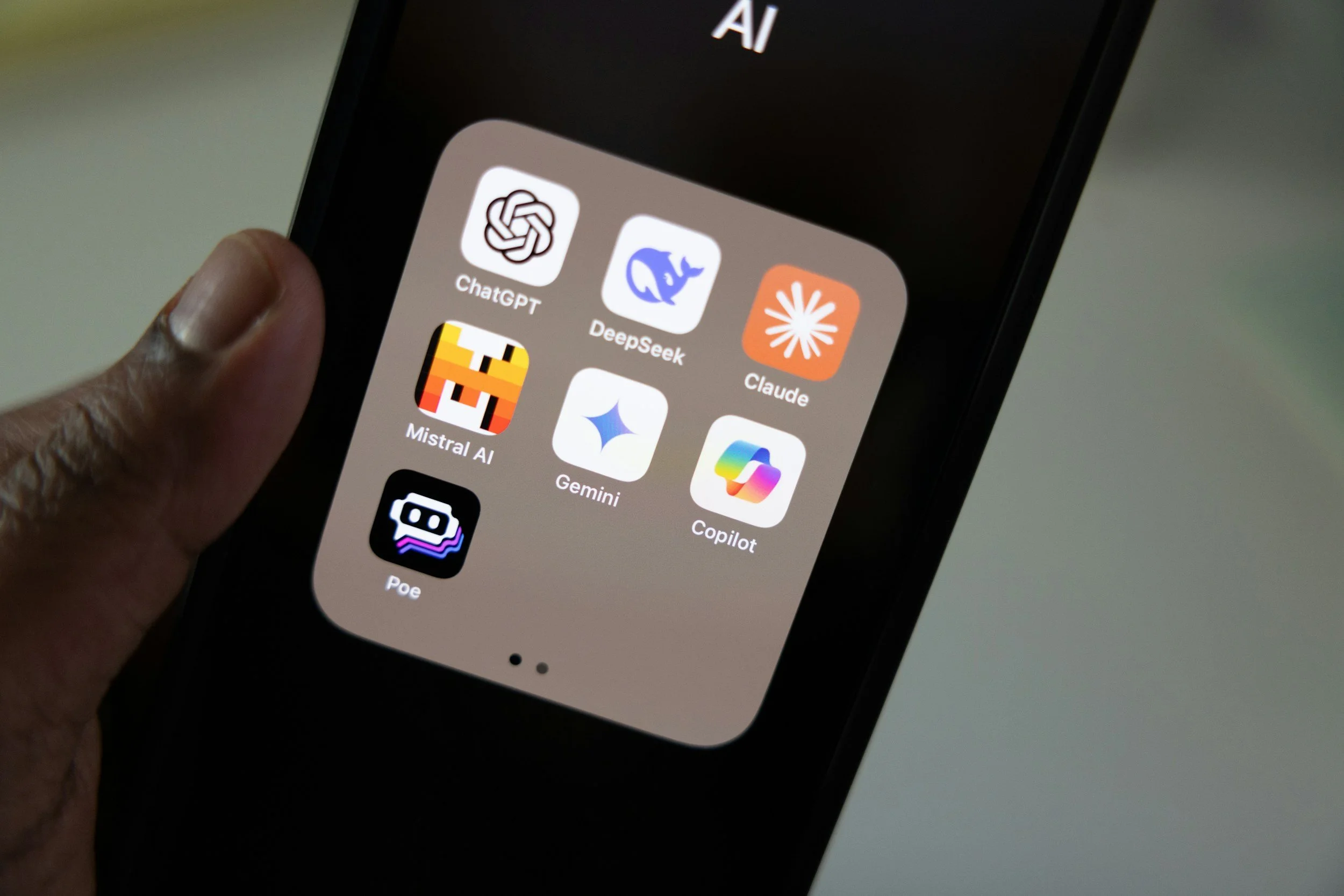
ChatGPT, Gemini, Claude, Copilot, and other AI assistants that have emerged in recent years are, at their core, tools that can write, edit, summarize, translate, analyze, answer questions, and generate ideas from natural language instructions.
That means you don’t need to know how to code to use them. You don’t need technical expertise. You just need to know how to write what you want—in the language you want—and the tool responds.
For a Latina entrepreneur managing her own business—creating her own content, answering her own emails, designing her own campaigns, and doing all of it in two languages—this represents something very concrete: hours of work reduced, tasks delegated to a tool that doesn’t rest or charge by the hour, and a level of output that previously required a team.
Spanish in AI: better than you think
The most advanced AI models available in 2026 were trained on massive amounts of text in multiple languages, including Spanish in its different regional variations. That means they understand Mexican, Colombian, Argentine, Puerto Rican Spanish—and neutral Spanish—with a level of accuracy that would have been unthinkable just a few years ago.
The quality of responses in Spanish may vary slightly depending on the model and the topic, but for the most common small-business uses, the difference compared to English is minimal—and often imperceptible.
What does make a significant difference is how you ask. AI responds better to clear, specific, contextual instructions—and that applies in any language.
The art of asking well: how to write prompts that get real results
The most important skill for using AI effectively isn’t technical—it’s communicative. It’s called prompting, and it’s simply the ability to give clear instructions.
A simple structure works consistently well:
Define the role
Tell the tool who you want it to be.
“Act as a digital marketing expert for Latina-owned small businesses in the U.S.”
This dramatically improves tone, depth, and relevance.
Describe the context
The more context you give, the better the result.
“I run a Mexican catering business in Chicago. My clients are mostly middle-class Latino families. I want to create Instagram content.”
Specify the format
Be explicit about the output.
“Give me 3 Instagram captions, max 150 words each, in Spanish, with a warm and direct tone, no excessive emojis.”
Ask for revisions
If it’s not perfect, don’t start over—refine it.
“Make it more conversational.”
“Remove the second paragraph.”
“Use a more professional tone.”
High-impact uses for Latina entrepreneurs
These are the areas where AI delivers the highest return on time:
Content creation
Posts, captions, stories, campaigns. You can generate a week’s worth of content in both Spanish and English in the time it used to take to write one post.
Email responses
Paste a client email and ask for a professional, friendly reply in the right language. Faster—and often better structured.
Translation with cultural context
Not just literal translation—tone, audience, and nuance included.
Proposals and quotes
Describe your service and get a structured proposal with scope, pricing, and terms—ready to customize.
Basic market research
Trends, customer profiles, survey questions—useful insights without hiring a consultant.
Idea generation
When you’re stuck, ask for ideas. Not all will be perfect—but they’ll get you moving.
How to keep your voice while using AI
One of the biggest fears is sounding generic—like a machine wrote it. That fear is valid—and solvable.
The key: treat AI as an assistant, not the author.
What it gives you is a draft. Your role is to edit, personalize, and add what only you know—your tone, your stories, your perspective.
A powerful trick:
Paste 3–4 pieces of your own writing and say:
“Write this following the tone and style of these examples.”
Also, be explicit:
If you use humor, say it.
If you tell personal stories, say it.
If you include cultural references, say it.
The tool doesn’t know who you are—until you tell it.
Which tool to choose—and how much it costs
In 2026, the main options with Spanish support are:
ChatGPT (OpenAI): great all-around. Free version works for most needs. Paid (~$20/month) adds advanced features like image generation.
Gemini (Google): strong integration with Gmail, Drive, and Google tools.
Copilot (Microsoft): ideal if you use Word, Excel, or PowerPoint regularly.
Practical advice:
Start with a free version. Use it for 2–3 weeks. Then decide if paying is worth the time you’re saving.
The tool is yours
Let’s be clear about something: AI is not future technology. It’s present technology. And that present includes Spanish, Spanglish, and the lived experience of Latina entrepreneurs in the U.S.
Used intentionally, it can become one of the most accessible and powerful tools ever created to multiply what one person can do.
You don’t need to be a tech expert.
You need to know what you want—and how to ask for it.
And that, with complete certainty,
you already know how to do.