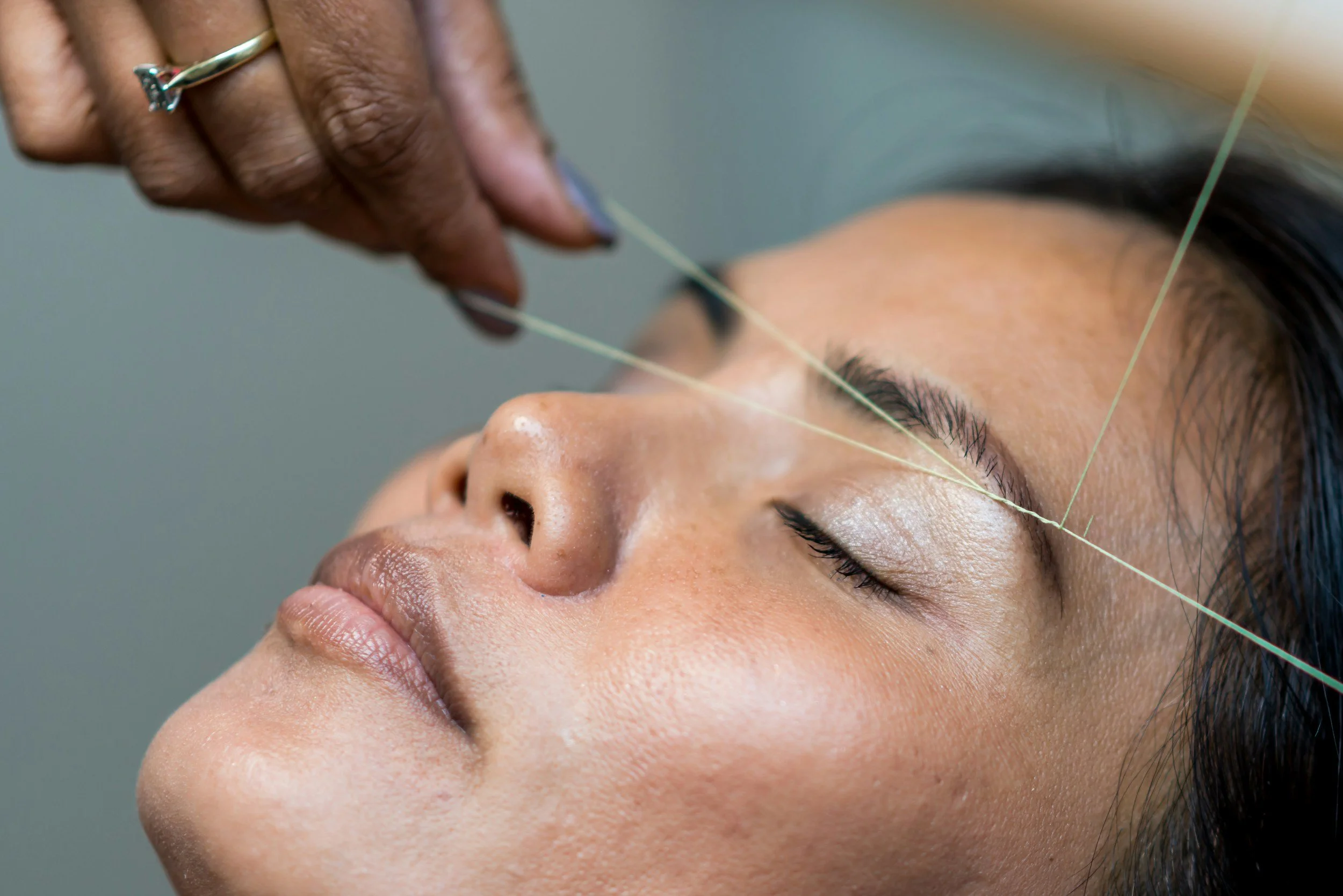

Eyebrow Architecture and the Gaze: The Power of the Facial "Frame" in the Digital Era
In today’s landscape of remote work and hybrid meetings, our professional presence has been largely condensed into a webcam frame. In this two-way, two-dimensional format, the gaze has become the epicenter of communication. However, the true strength of our expression isn’t fueled by eye contact alone; it is supported by what visagism experts call the architecture of the face: the eyebrows.

Think of eyebrows as the frame of a painting; they can either enhance the masterpiece or distract from it entirely. For the woman leading through a screen, well-defined brows are not a matter of vanity—they are a tool of applied neuro-aesthetics used to project confidence, clarity, and openness.
The Psychology of the Facial "Frame"
Why are eyebrows so decisive in a video call? The answer lies in our biology. The human brain relies on eyebrows to instantaneously decode intentions and emotions. Blurred or excessively drooping brows can project fatigue or hesitation, even when we are full of energy. Conversely, balanced, upward-reaching brows signal vitality and focus.
In a digital context—where we lose the majority of body language—the face must compensate for the missing data. A well-defined facial frame helps the listener process our expressions with less cognitive effort, facilitating a more fluid and empathetic connection. Have you noticed how your confidence on camera shifts when your gaze feels "structured"?
3 Golden Rules for a Professional On-Screen Frame
This is not about following fleeting trends; it is about respecting your natural facial architecture to maximize visual impact:
The Strategic Lift: The arch of the brow should ideally sit above the outer edge of the iris. This elevation opens the eyes and counteracts the "tired eye" effect often caused by overhead lighting or digital eye strain.
Density Without Saturation: On camera, makeup often appears either too faint or overly artificial. The key is a "hair-by-hair" fill in sparse areas, prioritizing the lower baseline of the brow to provide solid structural support for the eye.
Color Integrity: Your brow shade should harmonize with your hair roots. Brows that are too dark can look harsh under artificial light, while brows that are too light disappear, leaving the face without definition.
The "Focus Effect": Lighting and the Gaze
Eyebrow architecture is amplified by intelligent lighting. Soft frontal light minimizes shadows, but it is the definition of the gaze that prevents the face from looking flat. A subtle touch of matte highlighter just below the arch acts as an "instant lift," bringing sharpness to your expression.
The Bottom Line: Your gaze is your primary asset for sales and negotiation in the digital world. By refining your eyebrow architecture, you are sending a subconscious message of professionalism and attention to detail.
It is the deliberate design of your own presence, ensuring your message lands with the strength and clarity your leadership deserves.
Have you looked at yourself in your recent virtual meetings? Is the frame of your gaze working in your favor to project the confidence you feel?